You sent the email. It's been three days. No response. Now you're stuck in the awkward space between patience and panic: do you follow up and risk seeming pushy, or wait longer and risk being forgotten?
Here's the truth: most emails that don't get responses aren't ignored on purpose. They're opened, mentally flagged as "I'll respond to this later," and then buried under the 50 emails that arrive in the next hour. A well-timed, well-written follow-up isn't annoying — it's helpful. It brings your message back to the top when the original got lost in the noise.
The key is doing it right.
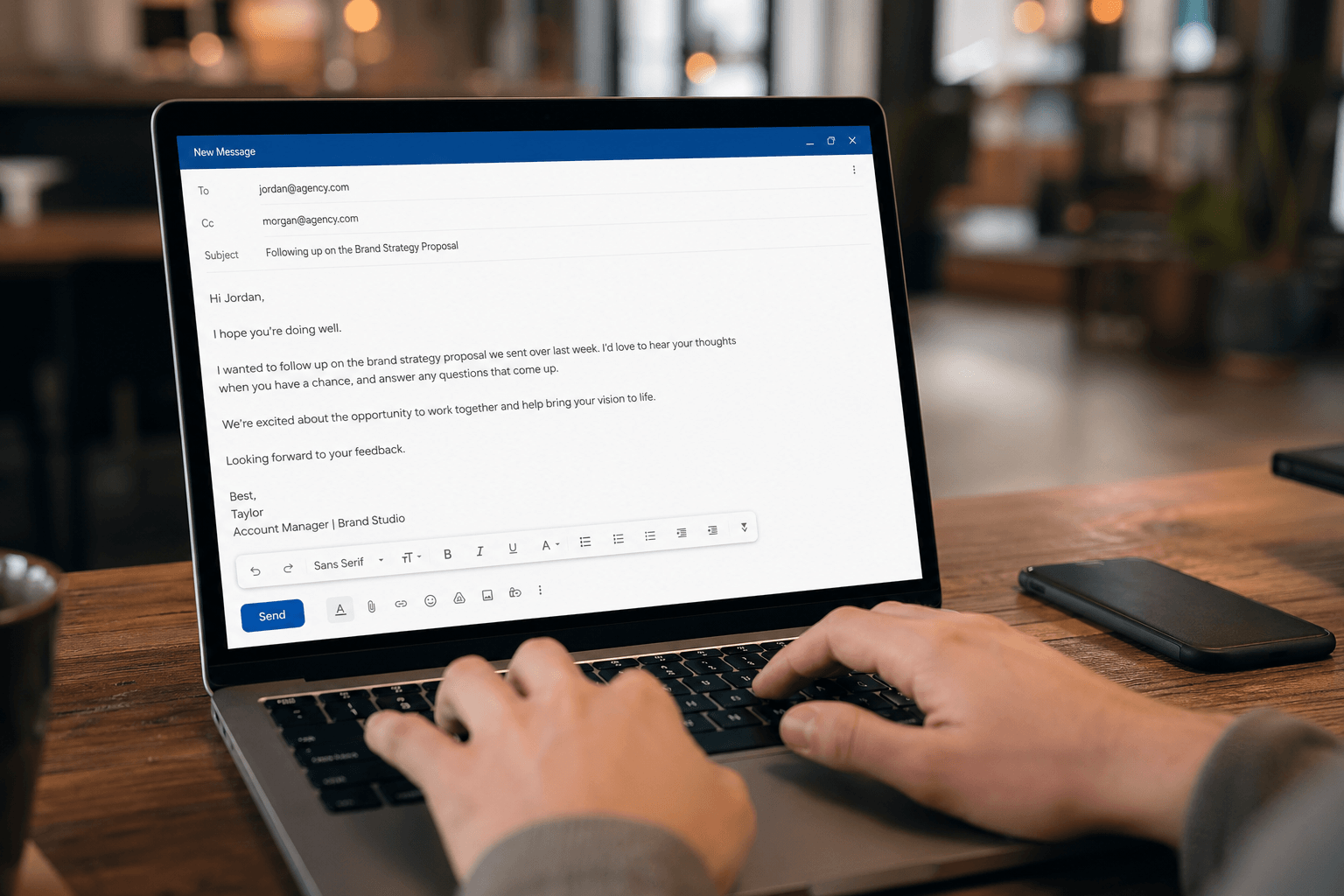
When to follow up
Timing matters more than wording. Follow up too soon and you seem impatient. Wait too long and the context is lost.
General business emails: Wait 2-3 business days. This gives the recipient time to process their inbox without feeling pressured.
Job applications: Wait 5-7 business days after the stated response timeline, or one week after submitting if no timeline was given. Hiring processes are slow — earlier follow-ups can feel premature.
Sales outreach: Wait 3-5 business days for the first follow-up. You can send 2-3 follow-ups total, spaced a week apart. After that, let it go or try a different channel.
Time-sensitive requests: If you need something by a specific date, follow up the day before your deadline with a polite reminder. "Just wanted to make sure this didn't slip through — I need to submit by tomorrow."
After meetings or introductions: Follow up within 24 hours while the conversation is fresh. This isn't chasing — it's professionalism.
The golden rules of follow-up emails
Reply to your original email. Don't start a new thread. Replying to the original keeps context intact — the recipient can scroll down and see what you're referring to without searching. It also signals "this isn't a new request, it's the same one."
Keep it shorter than the original. Your follow-up should be 2-4 sentences. The context is already in the thread below. You're just bumping it with a polite nudge, not restating the entire case.
Add value or new context. The best follow-ups aren't just "checking in" — they provide a reason to respond now. New information, a simplified ask, a deadline reminder, or a reduction in scope. "I've narrowed it down to two options — would love your quick take on A vs B" is easier to respond to than the original email that asked for comprehensive feedback.
Make it easy to say yes (or no). Reduce friction. Instead of open-ended questions, offer choices: "Would Tuesday or Thursday work?" instead of "When are you free?" Binary choices get faster responses than open questions.
Don't apologize for following up. "Sorry to bother you again" undermines your message. You're not bothering anyone — you're communicating professionally about something that matters. A confident, polite follow-up is always better than an apologetic one.
Templates for every situation
The gentle nudge (general):
"Hi [Name], just floating this back to the top — I know how quickly things get buried. Would love your thoughts on [specific ask] when you have a moment. No rush, but ideally by [date]. Thanks!"
The deadline reminder:
"Hi [Name], friendly reminder that I need [specific thing] by [date] to keep things on track. Let me know if that still works or if you need more time — happy to adjust. Thanks!"
The simplified ask:
"Hi [Name], I realize my last email had a lot of detail. The key question is: [one clear question]? A one-line response would be perfect. Thanks!"
After a meeting:
"Hi [Name], great speaking with you today. To recap: [1-2 key takeaways or action items]. I'll [your next step] by [date]. Let me know if I've missed anything. Talk soon!"
After no response (second follow-up):
"Hi [Name], I know you're busy, so I'll keep this brief: [one-sentence restatement of the ask]. If now isn't the right time, totally understand — just let me know and I'll circle back later. Thanks!"
After a job application:
"Hi [Name], I submitted my application for [role] on [date] and wanted to express my continued interest. I'm particularly excited about [one specific thing about the company/role]. Happy to provide any additional information. Thanks for your time!"
Re-engaging a cold lead:
"Hi [Name], I reached out a few weeks ago about [topic]. Since then, [new development or relevant update]. Would it make sense to have a quick conversation? If not, no worries at all."
How many follow-ups are too many?
For most professional contexts, 2-3 follow-ups is the right range. After that, silence is itself an answer — or the conversation needs to move to a different channel (phone call, in-person, a mutual connection).
The exception is sales outreach, where longer cadences (5-7 touches across email, LinkedIn, and phone) are standard. But for peer-to-peer professional communication, three unanswered emails means it's time to pause.
The real problem: follow-ups that get lost
Here's what nobody talks about: your follow-up can also get buried. The recipient's inbox is just as messy as yours. Your carefully crafted nudge arrives at the same time as 15 other emails and slides below the fold within the hour.
This is a fundamental limitation of traditional email clients — everything arrives in one flat list, and even well-intentioned recipients lose track.
Faraday addresses this from your side by ensuring you never miss responses when they do come. Direct replies and personal messages are automatically surfaced above noise. If someone responds to your follow-up three days later, that response is front and center in your inbox — not buried beneath newsletters and automated notifications.
Write the follow-up. Time it right. Make it easy to act on. And make sure your inbox is intelligent enough to surface the response when it arrives.
