Most cold emails get deleted within two seconds. Not because the recipient is rude, but because the email gives them no reason to care. It's generic. It's long. It's clearly sent to hundreds of people. And it asks for something before offering anything.
Cold emailing — reaching out to someone who doesn't know you — is one of the hardest communication skills to master. When done badly, it's spam. When done well, it opens doors: new clients, partnerships, jobs, investments, mentorships, and opportunities that simply wouldn't exist otherwise.
Here's what separates the cold emails that get replies from the ones that get trashed.
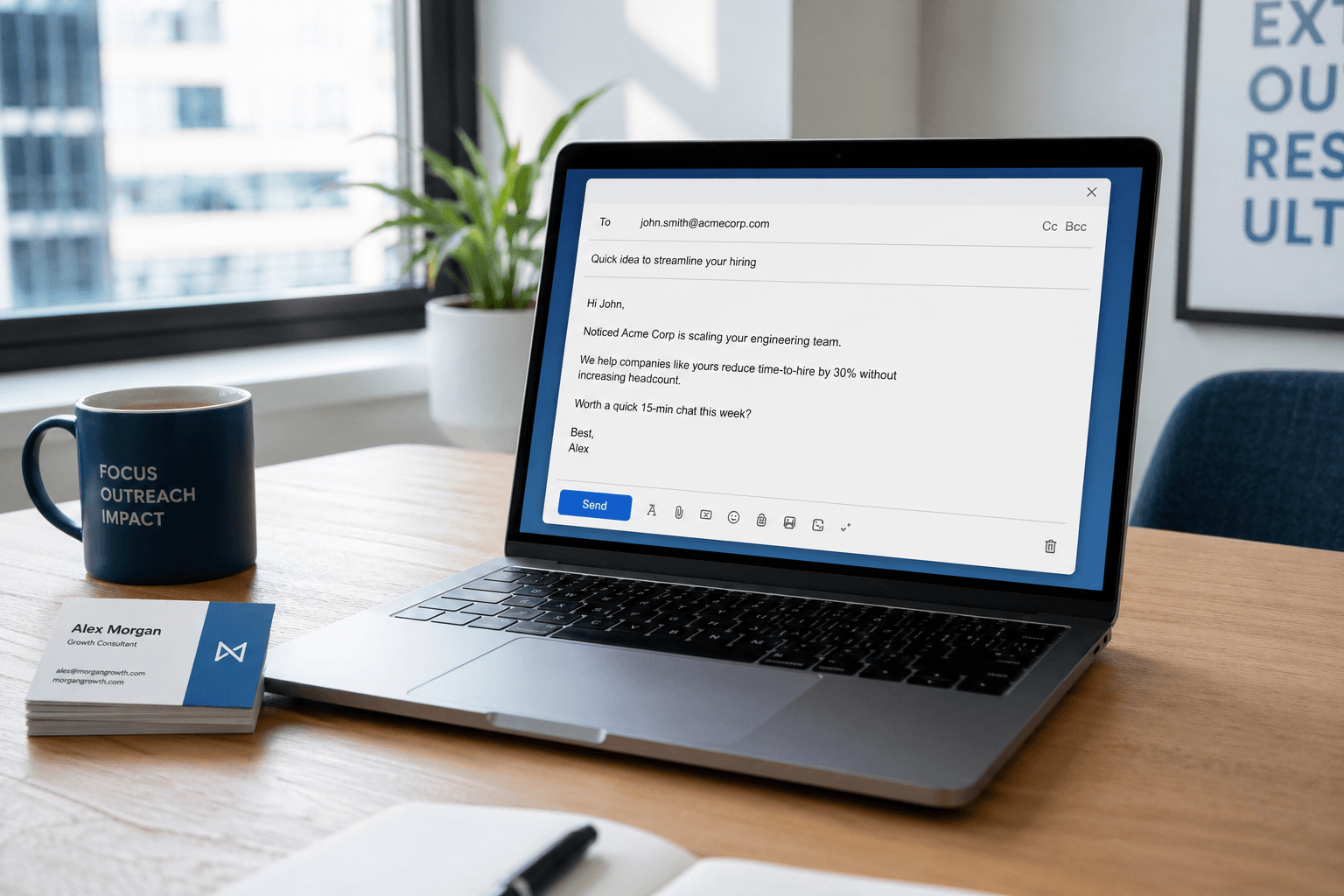
Why most cold emails fail
Before learning what works, understand why most don't:
No personalization. "Dear Sir/Madam" or "Hi there" signals mass outreach. The recipient knows instantly that you didn't write this for them specifically. If the first line could apply to anyone, it applies to no one.
Leading with yourself. "I'm [name], founder of [company], and we do [thing]." The recipient doesn't care about you yet. They care about their own problems. An email that starts with "I" is already losing.
Too long. A cold email should be under 125 words. Studies consistently show that emails between 75-125 words have the highest response rates for cold outreach. Every word beyond that reduces the chance of a reply. You're asking a stranger for their time — respect that by being concise.
Vague ask. "I'd love to pick your brain" or "Let's explore synergies" means nothing. The recipient doesn't know what you want, so they can't evaluate whether to engage. A specific ask gets a specific response.
No exit ramp. Emails that feel like obligations ("When can we schedule a call?") create pressure. Emails that give permission to decline ("If this isn't relevant, no worries at all") paradoxically increase response rates. People respond more when they feel free not to.
The anatomy of a cold email that works
Subject line: Short, specific, and curiosity-provoking.
Keep it under 6 words. Don't be clickbaity. The best cold email subject lines sound like they came from someone the recipient already knows.
Good: "Quick question about [their project]"
Good: "[Mutual connection] suggested I reach out"
Good: "Saw your talk at [event]"
Bad: "Exciting opportunity for you!!"
Bad: "Introduction — [Your Company Name]"
First line: About them, not you.
Show that you've done your homework. Reference something specific — a blog post they wrote, a product they launched, a talk they gave, a company milestone. This signals effort and genuine interest.
"I read your piece on [topic] — the point about [specific detail] really resonated."
"Congrats on [specific achievement]. The approach you took to [specific thing] was impressive."
The bridge: Connect your relevance to their world.
In 1-2 sentences, explain why you're reaching out in a way that connects to their interests, not yours. What problem of theirs can you help with? What context makes this relevant to them right now?
The ask: Specific, small, and easy to say yes to.
Don't ask for a 30-minute call on first contact. Ask for something small: a quick question answered via email, a 15-minute coffee chat, their opinion on one specific thing. Lower the bar for engagement.
The exit ramp: Give them permission to decline.
"If this isn't a priority right now, totally understand." This reduces pressure and, counterintuitively, increases response rates.
Templates that convert
Reaching a potential client:
Subject: Quick question about [their specific challenge]
"Hi [Name], I noticed [specific observation about their business/product]. We've been helping companies like [similar company] solve [specific problem], and I thought it might be relevant to what you're building. Would a 10-minute call next week be worth exploring? Either way, no pressure — I know these messages come in waves. [Your name]"
Reaching an investor:
Subject: [Mutual connection] suggested I reach out
"Hi [Name], [Mutual connection] mentioned you'd be a great person to speak with about [space/category]. We're building [one-sentence description] and are seeing [one concrete traction metric]. Would you be open to a brief chat this month? Completely understand if the timing isn't right. [Your name]"
Reaching for advice/mentorship:
Subject: Admired your work on [specific thing]
"Hi [Name], Your [talk/article/project] on [topic] was genuinely helpful — especially [one specific takeaway]. I'm working on something in a related space and had one specific question: [clear, concise question]. Would love your perspective if you have a moment, but completely understand if you're swamped. Thanks, [Your name]"
Job outreach:
Subject: [Role] at [Company] — background in [relevant skill]
"Hi [Name], I saw the [role] opening at [company] and wanted to reach out directly. My background in [specific relevant experience] aligns closely with what you're building — particularly [one specific connection]. I'd love to chat if you think there's a fit. My resume is attached, but happy to share anything else that's helpful. [Your name]"
The follow-up cadence
Most replies to cold emails come from the follow-up, not the original. Studies show that the second and third emails in a sequence often outperform the first in response rates.
Follow-up 1: 3-4 days after the original. Keep it brief: "Just floating this back up — would love to connect if the timing works."
Follow-up 2: 7-8 days after follow-up 1. Add new value: share a relevant article, reference a new development, or simplify the ask.
Follow-up 3 (final): 10-14 days later. The "breakup email": "I don't want to be a pest — I'll assume the timing isn't right. If things change, I'd love to hear from you." This often gets the highest response rate of the entire sequence.
After 3-4 unanswered emails, stop. Persistence becomes spam after that point. Move on or try a different channel (LinkedIn, mutual introduction, event).
Tracking responses in a noisy inbox
When you're sending cold outreach at scale, tracking who replied, who didn't, and which follow-ups are due becomes its own challenge — especially when those replies arrive in an inbox cluttered with newsletters, notifications, and unrelated email.
Faraday helps here by automatically surfacing personal replies above noise. When someone responds to your cold email three days later, that response appears prominently in your inbox — not buried beneath 40 promotional emails you received in the meantime. The intelligent classification ensures that real human responses always get your attention, regardless of what else arrived.
Cold email is a skill. Master the craft of writing them — and make sure your inbox is smart enough to catch the replies.
