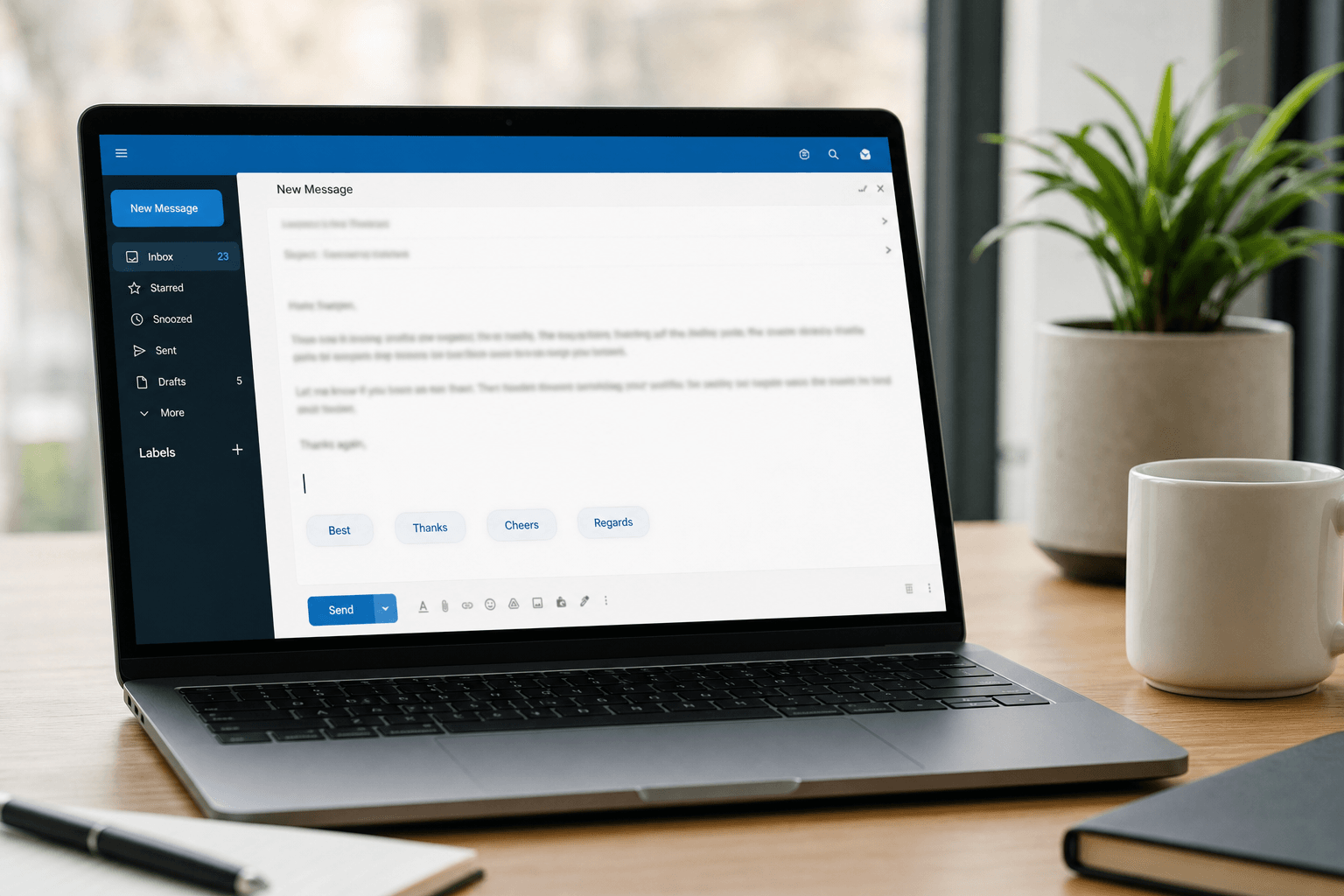
 You've written the perfect email. Clear subject line. Concise body. The right tone. And then you get to the end and freeze: how do I sign off?
It sounds trivial. It isn't. Your email sign-off is the last thing the recipient reads — it sets the tone for how your entire message is remembered. Too formal and you sound stiff. Too casual and you sound unprofessional. Too creative and you sound like you're trying too hard.
Here's the definitive guide to ending emails — with 50+ sign-offs organized by situation, so you never have to wonder again.
The universal safe choices
These work in virtually any professional context. When in doubt, use one of these:
Best, — The modern default. Professional without being stiff. Works for colleagues, clients, and strangers alike. Some people find it generic, but generic is exactly the point — it never offends, never confuses, and never distracts from your message.
Best regards, — Slightly more formal than "Best." Good for first-time emails to people you haven't met, international correspondence, or when you want to signal respect without formality.
Thanks, — Warm and efficient. Perfect when the email involves any kind of request, even implicitly. The slight informality makes it human.
Thank you, — The formal version of "Thanks." Use when the email genuinely asks for something — a meeting, a favor, a response to a question. Feels more sincere than "Thanks" in contexts where you're genuinely grateful.
Regards, — Professional and neutral. Common in corporate, legal, and financial contexts. Some find it cold, but it's never wrong.
For colleagues and people you know
When you have an existing relationship, you can be warmer:
Cheers, — Common in the UK, Australia, and among startups. Friendly without being overly casual. Avoid in very formal industries or with people who might find it too informal.
Talk soon, — Implies an ongoing relationship. Good for colleagues, regular collaborators, and people you actually will talk to soon.
Speak soon, — Same as "Talk soon" with a slightly more British feel.
All the best, — Warmer than "Best" but still professional. Good for people you like and respect.
Take care, — Personal and genuine. Best for colleagues you have a friendly relationship with. Can feel too intimate for purely transactional emails.
Have a good one, — Casual but not sloppy. Works for Friday afternoon emails to teammates.
Enjoy your weekend, — Context-specific but always appreciated. Shows you're aware of timing and considerate of the recipient's time off.
Hope this helps, — Perfect when you've answered a question or provided information. Adds a genuine touch without being pushy.
For clients and external contacts
Slightly more polished, slightly more careful:
Looking forward to hearing from you, — Polite nudge that you expect a response. Good for proposals, follow-ups, and sales emails. Don't use if you don't actually need a response — it creates unnecessary pressure.
Looking forward to it, — When you've confirmed a meeting, event, or collaboration. Short and genuine.
Please don't hesitate to reach out, — Corporate standard for "I'm available if you need me." Slightly overused but still effective when genuine.
Let me know if you have any questions, — Good for emails that deliver information, reports, or deliverables. Opens the door without demanding a response.
I appreciate your time, — Respectful and professional. Good when you've asked someone senior or busy for something.
With gratitude, — Sincere and warm. Best reserved for situations where you genuinely mean it — a mentor who gave advice, a client who went above and beyond, a colleague who covered for you.
Warmly, — More personal than "Best regards" but still professional. Common in creative industries, non-profits, and education.
Kind regards, — The slightly warmer cousin of "Regards." Popular in British English and across Europe. Professional, polished, never wrong.
Warm regards, — A step above "Kind regards" in warmth. Good for people you've built a relationship with.
For job applications and recruiting
These situations call for polished professionalism:
Thank you for your consideration, — The classic job application close. It's expected and safe.
I look forward to discussing this further, — Confident without being presumptuous. Good for cover emails and follow-ups after interviews.
Thank you for the opportunity, — After an interview or when responding to an offer. Genuine and professional.
Sincerely, — Very formal. Best for cover letters and formal applications. Can feel overly stiff in a casual email exchange with a recruiter.
Respectfully, — Highly formal. Reserved for very senior recipients, formal institutions, or traditional industries.
For when you need action
Sometimes the sign-off needs to reinforce a request:
Looking forward to your thoughts, — Softer than "Please respond." Implies you value their input.
Would appreciate your input by [date], — Direct but polite. Sets a clear expectation without being demanding.
Let me know how you'd like to proceed, — Puts the ball in their court. Good for proposals and decisions.
Happy to discuss further, — Opens the door to a meeting or call without forcing one.
Standing by for your go-ahead, — Clear, professional, and action-oriented. Good for approvals and sign-offs on deliverables.
For casual or personal emails
When formality isn't required:
Later, — Very casual. Only for close colleagues or friends.
xo — Personal. Only for friends and family, never professional contacts.
Sent from my inbox that's smarter than me, — If your workplace culture embraces humor. Use sparingly.
— [Your initial or first name] — No closing at all, just a dash and your name. Works in ongoing threads where you've already established the relationship. Common among busy executives and in fast-paced environments.
Sign-offs to avoid
"Thx" — Too casual for anything professional. You have time to type six letters.
"Best wishes," — Reads like a greeting card. Fine for birthday emails, odd for project updates.
"Yours truly," — Unless you're writing a letter in 1953, skip this.
"Cordially," — Stiff, archaic, and makes you sound like a wedding invitation.
"God bless," — Religious sign-offs in professional email are risky. Even well-intentioned, they can make recipients uncomfortable.
"Sent from my iPhone" — Not a sign-off. Replace it with your actual signature or remove it.
No sign-off at all — In a first email, this can read as abrupt or rude. In an ongoing thread, it's fine. Context matters.
The rule that makes everything simple
Match the recipient's energy. If they signed off with "Cheers," you can too. If they used "Kind regards," mirror it. If you're initiating, err slightly more formal than you think necessary — it's always easier to become more casual than to recover from being too informal.
And remember: the sign-off is 1% of your email. The other 99% — the clarity, the structure, the tone, the relevance — matters far more. A brilliant email with "Best," is infinitely better than a rambling one with "With warmest regards and deepest appreciation."
Write the email well. End it simply. Move on to the next one. And if the next one is buried somewhere in a cluttered inbox, Faraday can help you find it — every email automatically organized, categorized, and surfaced so you spend less time searching and more time writing emails worth reading.