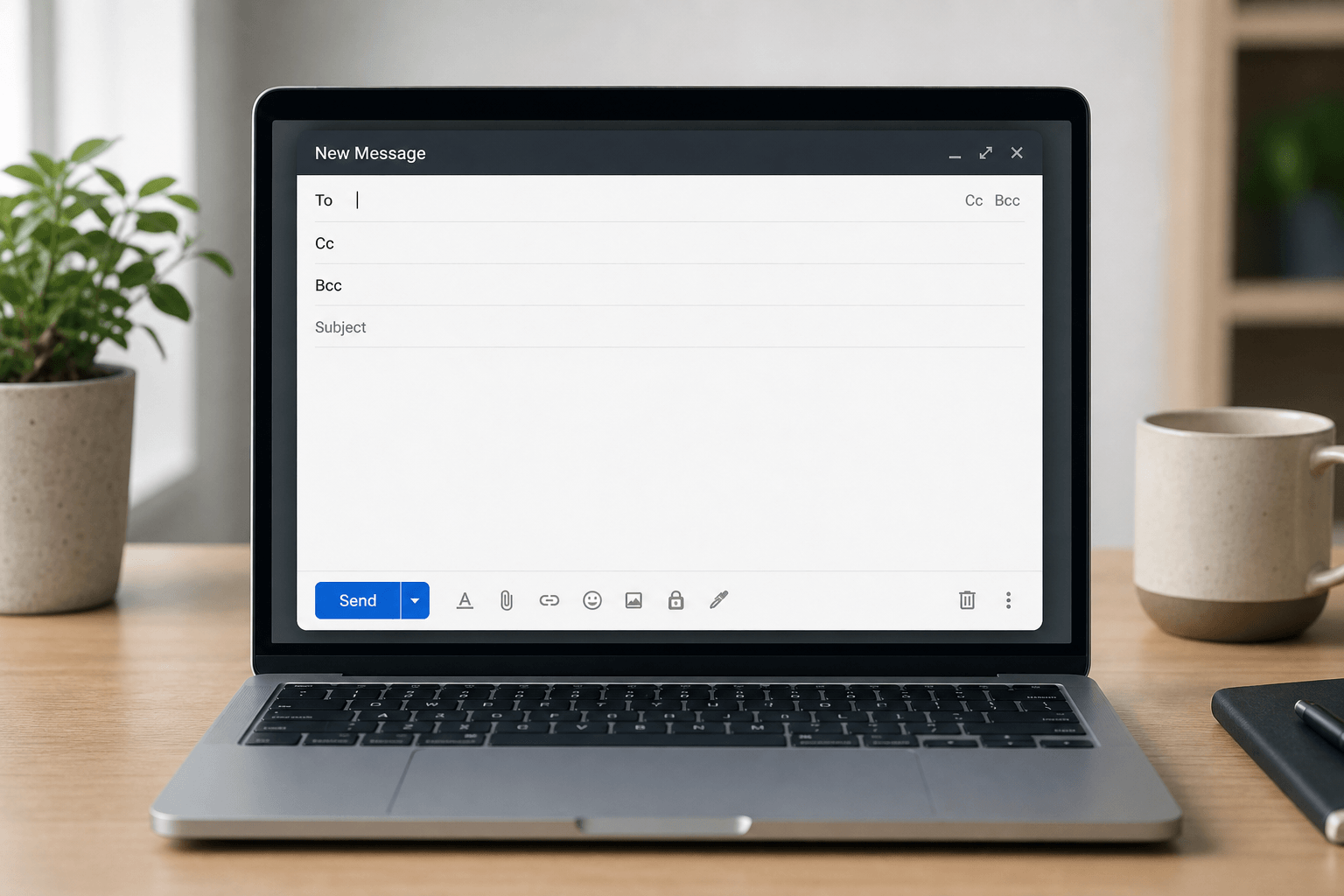
 Email has four audience modes hiding in plain sight: To, Cc, Bcc, and Reply All. Misusing them causes confusion at best — privacy leaks and reputation damage at worst.
Here's a straight explanation with rules that prevent disasters.
To: primary recipients
To is for people expected to read and respond — they're part of the outcome. If someone's not expected to act or engage, they usually shouldn't be in To.
Cc: transparency, not action
Cc means carbon copy — you're keeping someone in the loop. Standard etiquette: Cc recipients are informed observers; they aren't necessarily expected to reply unless they choose to.
Use Cc when: a manager should see you're handling something; cross-functional awareness matters; you want a paper trail that someone was notified.
Don't Cc... someone's boss to intimidate them; half the company "just FYI"; anyone who has no legitimate reason to see the thread.
Bcc: invisible distribution
Bcc (blind carbon copy) hides recipients from each other — people in To/Cc won't see who was Bcc'd.
Legitimate uses:
- Sending a bulk announcement where recipients shouldn't see each other's emails (though dedicated mailing lists are often better).
- Protecting privacy when introducing unrelated parties — though a forward or separate intro email is usually cleaner.
- Moving someone off-thread politely by replying without including them — never use Bcc tricks to secretly loop managers into interpersonal disputes; that's toxic.
Bcc hazard: If a Bcc'd recipient hits Reply All, they may expose themselves accidentally depending on client behavior — treat Bcc as fragile.
Reply All: when to use
Reply All is appropriate when your response genuinely matters to everyone on the thread — coordinating schedules, shared decisions, collaborative troubleshooting.
Avoid Reply All when your note is only relevant to one person — "Thanks!" doesn't need to ping twelve people. Those pile-ons are why organizations ban Reply All jokes.
When in doubt: Reply (single recipient), add others manually only if needed.
One-line cheat sheet
To = needs to engage. Cc = needs to know. Bcc = invisible inclusion — use sparingly and ethically. Reply All = only when everyone cares.
Cleaner addressing reduces noise — and noise reduction is exactly what Faraday applies automatically by separating signal threads from everything else. Fewer pointless Reply All storms start when people aren't drowning in mixed-purpose inboxes.
Get the fields right once, and your email stops creating problems it was supposed to solve.